Is Traditional TPRM on the Verge of Extinction?
Is Traditional TPRM on the Verge of Extinction?
.jpg)
Traditional Third-Party Risk Management (TPRM) practices show signs of becoming outdated. Once defined by manual processes and limited scalability, many of these programs now fail to deliver measurable value. While a small number of mature organizations have successfully modernized their TPRM strategies, the majority remain constrained by inefficient tools, misaligned practices, and resource shortages.
The Legacy of Traditional TPRM
Historically, TPRM relied on labor-intensive workflows: distributing lengthy questionnaires, chasing suppliers for responses, and manually consolidating data—often in spreadsheets. The introduction of technical scans has added complexity by generating large amounts of uninvited data that is hard to interpret. These efforts improved visibility into third-party risks but often failed to reduce them in practice.
Only a limited number of organizations have implemented mature TPRM programs that align with broader risk management objectives. Most face recurring challenges due to poor alignment with internal structures, limited scalability, and a lack of skilled personnel. These issues are often made worse by inflexible tools that do not adapt well to an organization’s culture or operational model.
Current Challenges in TPRM Programs
Despite the emergence of more advanced tools, many organizations still operate under outdated TPRM models. Some adopt standardized best practices that don’t reflect their internal processes. Others launch programs for a narrow group of suppliers and fail to scale due to resource constraints or lack of strategic clarity. As a result, many initiatives fall short of their intended impact and deliver minimal risk mitigation value.
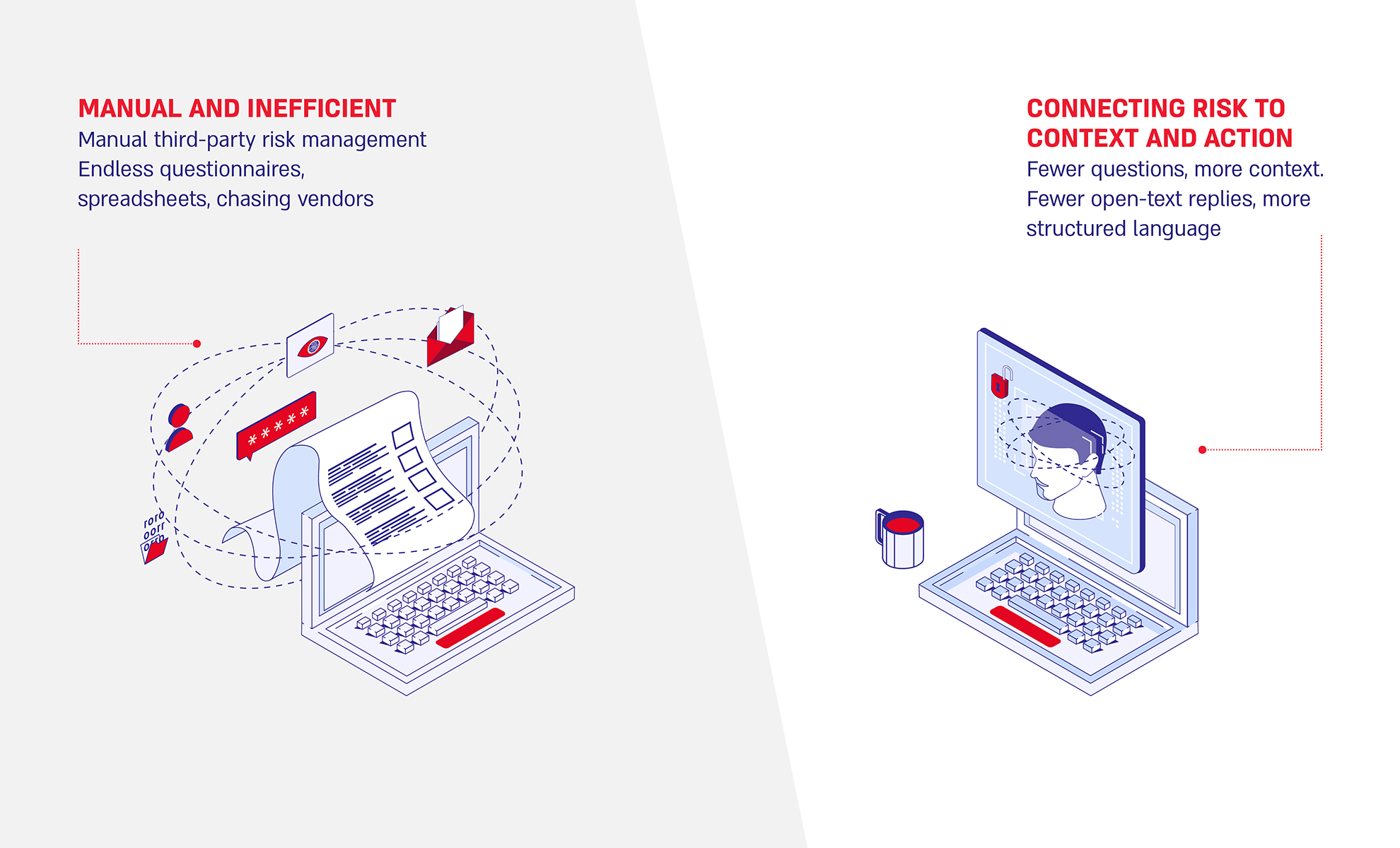
The Vision: Autonomous, Intelligent TPRM
Looking forward, the future of TPRM lies in intelligent automation. In this proposed model, AI agents representing both organizations and suppliers collaborate through automated vetting processes. These agents exchange structured responses, negotiate risk mitigation strategies, and implement compensating controls.
Technical findings would be directly linked to compliance frameworks, with every risk contextualized based on the nature of the supplier relationship. Procurement workflows would incorporate this process end-to-end, including automated contract generation tied to assessment results.
Reality Check: Automation Demands Structure
Despite the promise of AI-driven TPRM platforms, these are not plug-and-play solutions. For automation to deliver meaningful results, organizations must first define internal workflows, identify relevant stakeholders, and align the program with their specific risk appetite and business structure.
Without this foundational work, even the most sophisticated platforms are not likely to make a big difference.
Key Trends Driving the Future of TPRM
To enable scalable, intelligent TPRM, three key developments must occur:
Availability of reliable online information
AI tools must be able to extract and interpret publicly available data about suppliers’ security maturity. However, many organizations, particularly those outside the tech sector, do not yet publish such information. This trend is growing but it will take time to reach critical mass.
Maturity of large language models (LLMs)
While LLMs have significantly improved natural language processing, they still struggle with structured security assessments. The modular nature of many templates and the complexity of control frameworks present challenges for automation. Development and standardization are essential.
Realistic Autonomy Expectations
Many TPRM platforms promise fully autonomous workflows, including stakeholder identification and risk classification. However, these features often lack flexibility to accommodate organizational nuances. TPRM must be tailored to each organization’s structure, supply chain, and risk profile to be effective.
Conclusion: Building Towards Intelligent TPRM
The next evolution of TPRM will be defined by its ability to connect different parts—supplier classification, technical findings, and business context—into a well-connected, intelligent system. Organizations that proactively align their TPRM programs with business objectives, embrace interconnectivity, and prepare for AI integration will be best positioned to lead in this new era of risk management.